Meet Your Therapist
Maggie Daggett, LPC
I’m originally from Minnesota, where I attended the University of Minnesota and studied Human Resource Development with a minor in Psychology. Becoming a therapist had always been a dream of mine — I even wrote it down as my dream job in grade school — but my career initially took me into Human Resources.
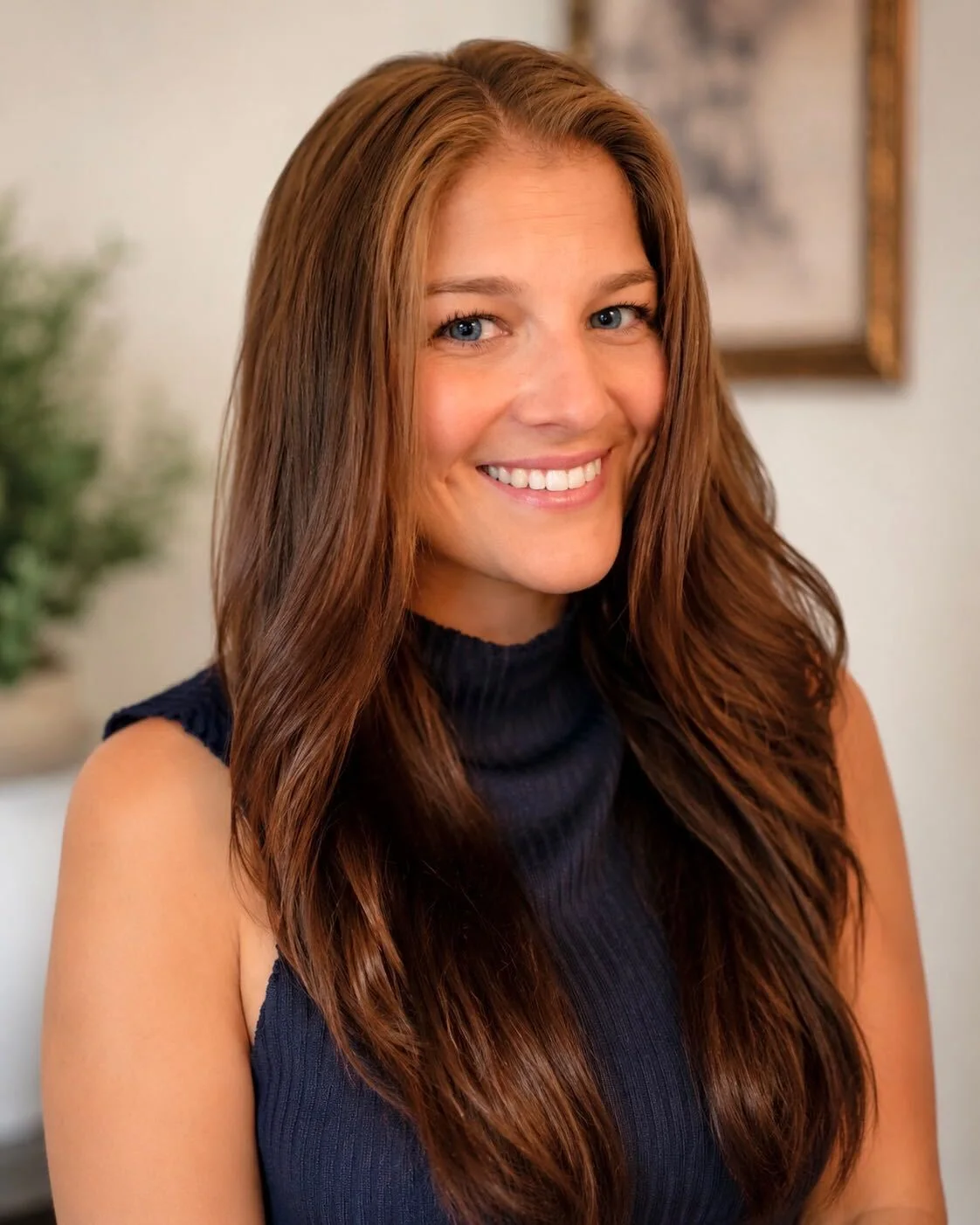
Meet Maggie
When COVID unexpectedly left me without a job, the path I thought I was on suddenly changed. While I certainly didn’t see it this way at the time, that transition became the push I needed to finally pursue something I had always felt drawn to. It taught me something I continue to carry with me: sometimes the moments that disrupt the path we thought we were supposed to be on can lead us toward something that feels much more aligned with who we are.
For me, that meant moving to Colorado, earning my Master’s degree in Clinical Mental Health Counseling from Regis University, and finding my way back to the career I had dreamed about since I was little.
Looking back, becoming a therapist makes a lot of sense. I’ve always been deeply empathetic and curious about people. Growing up, I also had a beautiful example of what it looked like to genuinely love the work you do. My mom was a kindergarten teacher for 20 years, and I watched how much she loved supporting her students, helping them grow, and celebrating who they were becoming. I think some of that spirit naturally found its way into me.
I’ve always wanted to hear people’s stories, understand what shaped them, sit with them through the hard parts, and genuinely celebrate their wins. Getting to do that every day is one of the most rewarding parts of this work.
My own experience of being diagnosed with ADHD as a woman in my early twenties also shaped the therapist I wanted to become. Suddenly, experiences that had been present since childhood had context. I began to understand how easily we can form narratives about ourselves — “I’m too much,” “I’m lazy,” “I’m not trying hard enough” — when we don’t yet have the language to understand what is actually happening.
That experience deepened my passion for working with neurodivergent clients and creating a space where people can understand their brains, experiences, and patterns without reducing themselves to a diagnosis.
My clinical experience has allowed me to work with clients across the lifespan, from children as young as four through adulthood, as well as couples and families, in outpatient and higher levels of care. Earlier in my career, I worked extensively with young children and families through play-based therapy. That experience continues to shape the way I understand development, family dynamics, childhood experiences, and the younger versions of ourselves that we carry into adulthood.
Today, I primarily work with adolescents ages 12+, adults, couples, and families, with a particular passion for trauma, attachment, inner-child healing, neurodivergence, relationships, and understanding the patterns we carry with us.
My Approach to Therapy
A lot of my work comes back to one question: why?
Our experiences — particularly the ones we have early in life — can shape the beliefs we develop about ourselves, relationships, and the world around us. Anxiety, people-pleasing, perfectionism, hyper-independence, difficulty trusting others, emotional overwhelm, or feeling like you’re somehow “too much” or “not enough” often make more sense when we understand where they came from.
For me, healing isn’t about finding someone to blame, including ourselves. It’s about understanding. We can become curious about the people and environments that shaped us while still acknowledging the impact those experiences had. Understanding someone’s limitations, history, or the resources they had available to them does not mean minimizing what happened to you.
We can begin separating what happened to you from what you learned to believe about yourself because of it.
As a therapist, I show up authentically as myself. Before anything else, I believe we’re two humans sitting in a room together, and the relationship we build matters. My approach is warm, relational, compassionate, and gentle while still being directive when you need it.
I won’t just sit back and nod. I’ll ask questions, gently challenge patterns, help you connect the dots, and sit alongside you as we explore what might be underneath them. We can do incredibly deep work while still leaving room for humor, personality, creativity, and the occasional “wait…that actually explains a lot.”
My work is trauma-informed and attachment-focused, with a strong emphasis on understanding how earlier experiences and relationships continue to show up in the present. Inner-child and parts work can help us become curious about reactions rather than judging them — exploring where they came from, what they may have once protected you from, and what those younger or more vulnerable parts of you might need now.
Therapy with me also doesn’t always mean sitting on a couch and talking. Sometimes words only get us so far. Depending on what feels right for you, we might incorporate sand tray, art-based and creative interventions, guided imagery and visualization, mindfulness and meditation, experiential exercises, psychoeducation, or inner-child and parts work.
I also welcome spirituality into the therapy room when it is meaningful to you. This might include exploring intuition, meaning, connection, values, meditation, or your own spiritual beliefs and practices. Spirituality never has to be part of therapy, but there is absolutely space for it if it is important to you.
You don’t have to show up as a perfectly put-together version of yourself here — and you won’t get a perfectly scripted version of me either.
Who I Work With
I currently work with adolescents ages 12+, adults, couples, and families who may be navigating:
- Trauma, PTSD, complex trauma, and childhood wounds
- Attachment and relationship patterns
- Family-of-origin dynamics
- Inner-child healing
- ADHD and neurodivergence
- Executive functioning, masking, and emotional overwhelm
- Anxiety and emotional regulation
- People-pleasing, perfectionism, and difficulty setting boundaries
- Hyper-independence, trust, and vulnerability
- Self-worth and feeling “too much” or “not enough”
- Relationship and communication concerns
- Identity exploration and life transitions
- Grief, loss, stress, and burnout
- Spirituality, meaning, and connection
- Patterns you understand intellectually but still struggle to change emotionally
You don’t need to know exactly what you want to work on before coming to therapy. Sometimes the starting point is simply knowing that something keeps happening and you’re ready to understand why.
Approach & Treatment Styles
My approach may incorporate:
- Attachment-Based Therapy
- Trauma-Informed Therapy
- Inner-Child Healing
- Parts Work / IFS-Informed Interventions
- Sand Tray Therapy
- Art-Based & Creative Interventions
- Experiential Therapy
- Guided Imagery & Visualization
- Mindfulness & Meditation
- Spirituality-Informed Work
- Psychoeducation
- Relational Therapy
- Strengths-Based Therapy
Curiosity, Connection, Compassion & Celebration
At the center of my work are four things I deeply value: curiosity, connection, compassion, and celebration.
Curiosity about where your patterns, beliefs, and responses came from.
Connection to yourself, your story, and the people who matter to you.
Compassion for the versions of you that learned how to survive with what they had at the time.
And celebration — because therapy isn’t only about processing what hurt. It’s also about noticing what’s changing.
We celebrate the boundary you finally set, the pattern you recognized before falling into it, the moment you responded differently, the relationship that feels safer, or the younger version of you that finally feels heard.
Healing deserves to be acknowledged, too.
My hope is that therapy helps you understand not only what happened to you and what you learned to believe about yourself because of it, but also how much you’ve grown, what you’ve reclaimed, and who you’re becoming.
Working with Maggie
Rates & Scheduling
In-person sessions are available at Lola & Me Therapy, with telehealth options also available.
- Individual Therapy
- $175
- Couples & Family Therapy
- $200
- Parent Support Sessions
- $195
50-minute session
50-minute session
50-minute session
We are a private-pay practice and do not bill insurance directly. We provide superbills for possible out-of-network reimbursement, accept HSA payments, and offer reduced-fee options. Mentaya can submit claims on your behalf for a 5% fee per submitted session.
Start With a Conversation
Interested in working with Maggie?
Schedule a free 15-minute consultation. We’ll learn what you want to work on, answer your questions, and help determine whether Maggie is the right fit.
Book a Free Consultation →