Family Dynamics, Gratitude & Grief: Navigating the Complex Emotions of the Holidays
Making Room for the Complicated Parts of the Holidays
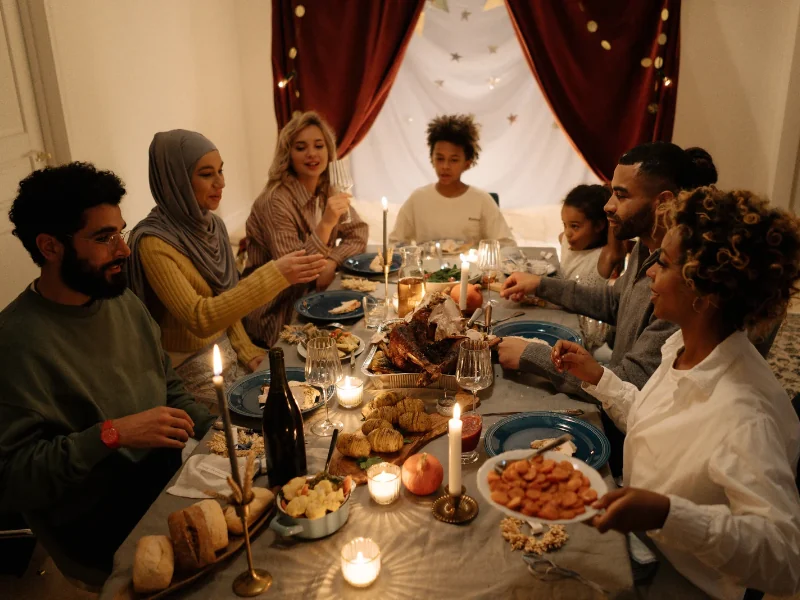
The holiday season is often portrayed as a time of joy, togetherness, and gratitude. We see images of families gathered around the dinner table, traditions passed down through generations, and loved ones celebrating what matters most. While these moments can be meaningful, the holidays can also bring complicated emotions that are harder to put into words.
For some, this time of year brings a renewed sense of connection. For others, it brings tension within family relationships, pressure to meet expectations, or reminders of what has changed or is no longer there. You may find yourself feeling grateful for the people in your life while also grieving a relationship that looks different than it once did. You may love your family and still feel overwhelmed by the dynamics that arise when everyone comes together.
These experiences can coexist. And making room for them is an important part of caring for your emotional well-being.
At Lola & Me Therapy, we recognize that navigating family dynamics, gratitude, and grief can be especially challenging during the holidays. Understanding where these feelings come from can help you move through the season with greater self-awareness, compassion, and confidence in your needs.
Understanding Family Dynamics During the Holidays
Family relationships are often some of our earliest and most influential relationships. They shape how we communicate, how we understand ourselves, and what we come to expect from others. Even as adults, spending time with family can bring us back into familiar patterns that may no longer reflect who we are today.
You might notice yourself becoming quieter around a critical family member, feeling responsible for everyone else's emotions, or slipping into the role of the peacemaker. Perhaps you feel pressure to make everyone happy, avoid difficult conversations, or meet expectations that have followed you for years.
These patterns are not always intentional. Over time, families develop ways of interacting, and each person may come to occupy a particular role. When everyone reunites for the holidays, those roles can resurface, even when we have worked hard to grow beyond them.
Recognizing these patterns is not about blaming family members or labeling relationships as unhealthy. Instead, it is an opportunity to understand how family dynamics affect you and identify what you need to feel more grounded in those relationships.
When Old Family Roles No Longer Fit
Personal growth can change the way we relate to our families. You may have developed stronger boundaries, become more comfortable expressing your needs, or started questioning expectations you once accepted without hesitation.
But when you return to familiar environments, others may still expect you to be the person you used to be.
This can create tension. Setting a boundary may be interpreted as being difficult. Making a different choice may disappoint someone. Speaking honestly may disrupt a family dynamic that has depended on avoiding conflict.
It can be uncomfortable to recognize that the version of you your family expects is not necessarily the version of you that exists today.
You are allowed to grow. You are allowed to change your mind, establish new boundaries, and relate to your family differently as an adult. Growth does not require you to reject your family or abandon meaningful traditions. It simply means making room for who you are now.
Grief Is Not Limited to the Loss of a Loved One
When we hear the word grief, we often think of losing someone to death. While bereavement is one form of grief, loss can take many different shapes. Sometimes, we grieve a person who is no longer here. Other times, we grieve a relationship that has changed, a future that did not unfold as we imagined, or a version of ourselves we no longer recognize.
These experiences may not always be acknowledged by others, which can make them especially difficult to process.
Grieving Changes in Relationships
Relationships evolve throughout our lives. A once-close friendship may fade. A romantic relationship may end. Family estrangement may create distance where there was once connection. You may still love someone while recognizing that maintaining the relationship in its current form is painful or no longer possible.
Even when a change is necessary, it can bring grief.
You might miss the person you knew, the closeness you once shared, or the sense of belonging that relationship provided. You may grieve the hope that things would eventually be different or struggle with the reality that a relationship cannot meet the needs you continue to have.
Family gatherings can make these feelings more noticeable. Questions about a relationship, the absence of someone who used to attend, or seeing other families interact may bring up emotions you thought you had already worked through.
Grief does not always mean you want things to return to how they were. Sometimes, it means acknowledging that something mattered to you, even if it could not remain the same.
Grieving the Person You Used to Be
Another form of grief can emerge as we grow and change.
You may miss an earlier version of yourself, such as the person you were before a major life transition, before a difficult experience, or before your priorities and relationships shifted. You may feel disconnected from your identity after becoming a parent, navigating a career change, ending a relationship, or moving through a season that required you to put your own needs aside.
You might also grieve the person you thought you would become.
Perhaps life looks different from what you imagined. A hoped-for relationship did not work out. A personal goal remains out of reach. A particular life path no longer feels possible, or you are learning to release expectations you once held for yourself.
This kind of grief can be difficult to explain because there may not be one specific event or loss that others can see. You may even feel that you should be happy with the life you have while privately mourning what you thought it would look like.
Both experiences can be real.
You can appreciate how far you have come and still miss parts of your past. You can feel hopeful about the future while grieving an expectation you are learning to release. You do not have to dismiss one experience to make room for another.
Making Space for Grief During the Holidays
Traditions can bring comfort, but they can also highlight what has changed. A familiar recipe, an empty seat at the table, a family photograph, or a gathering that feels different than it once did can bring unexpected emotions to the surface.
You may feel pressure to participate in traditions that no longer feel right for you. You may want to honor a memory while also acknowledging that the way you celebrate has changed. Or you may find yourself moving between sadness, gratitude, frustration, and joy throughout the same day.
There is no single correct way to experience grief.
You do not have to be finished grieving by the holidays, and you do not have to recreate old traditions simply because they are familiar. Sometimes, honoring what has changed means keeping a meaningful ritual. Other times, it means creating a new tradition or giving yourself permission to step away.
The goal is not to avoid every difficult emotion. It is to give yourself the space to experience those emotions without judgment and make choices that reflect your needs in the present.
Gratitude and Grief Can Exist Together
Gratitude is often emphasized during November, particularly as Thanksgiving approaches. Reflecting on what we appreciate can help us recognize meaningful relationships, everyday moments, and sources of support.
However, gratitude can become difficult when it is treated as an expectation rather than a personal experience.
You might hear reminders to focus on what you have, appreciate your family, or make the most of the time together. Although these messages may be well-intentioned, they can sometimes leave little room for sadness, disappointment, or frustration.
If you are grieving a loss, navigating a complicated family relationship, or feeling disconnected from yourself, being told to focus on the positive may make you feel as though your difficult emotions are inappropriate.
But gratitude does not require you to deny what hurts.
You can appreciate the people who show up for you while grieving the relationships that have changed. You can be thankful for your family and still need boundaries with certain relatives. You can recognize the good in your life without pretending that everything feels good.
Gratitude is not a requirement to be happy, and grief is not evidence that you are ungrateful.
Allowing these feelings to coexist can help you develop a more honest relationship with your emotions. Instead of forcing yourself to choose between being grateful and acknowledging your pain, you can recognize that your experience may include both.
Navigating Family Expectations, Guilt, and Boundaries
For many people, one of the most challenging parts of the holidays is managing expectations, both the expectations others place on us and the expectations we place on ourselves.
You may feel obligated to attend every gathering, maintain traditions, travel between households, or avoid topics that could create conflict. You might worry that saying no will disappoint someone or that setting a boundary will be interpreted as rejection.
These concerns can be especially difficult when family relationships are complicated or when you have spent years prioritizing other people's comfort over your own.
Learning to Set Boundaries Without Abandoning Your Needs
Boundaries are not about controlling other people's behavior. They are about identifying what you can participate in, what you are comfortable with, and what you need to protect your emotional well-being.
During the holidays, a boundary might look like:
- Deciding how long you will stay at a family gathering.
- Choosing not to discuss certain personal topics.
- Declining an invitation when you need rest or space.
- Taking a break from a conversation that becomes hurtful.
- Creating new traditions that better reflect your current circumstances.
- Communicating your needs rather than automatically agreeing to avoid disappointing someone.
Setting boundaries may feel uncomfortable, especially if others are accustomed to you always being available or accommodating. You may experience guilt even when your decision is reasonable and necessary.
That guilt does not automatically mean you are doing something wrong. Sometimes, it reflects how unfamiliar it feels to make a choice that considers your own needs.
You can care about your family without being responsible for managing every emotion, preventing every disagreement, or making every gathering enjoyable for everyone.
Releasing the Pressure to Keep the Peace
It is understandable to want family gatherings to feel peaceful. However, peace that depends on one person consistently suppressing their feelings or ignoring their needs can come at a high emotional cost.
You are not responsible for controlling how every family member responds to a boundary. You cannot guarantee that everyone will understand your decisions, agree with your perspective, or feel satisfied with the choices you make.
What you can do is communicate as clearly and respectfully as possible, make decisions that align with your values, and recognize when a situation is outside your control.
This may involve accepting that some conversations will remain unresolved or that certain relationships require more distance than you would prefer. It can be painful to acknowledge these realities, particularly when you wish things were different.
Sometimes, protecting your peace means allowing yourself to stop trying to make every relationship fit an expectation that no longer reflects reality.
How Therapy Can Help You Navigate Family Dynamics and Grief
When family relationships, personal change, and grief intersect, it can be difficult to understand what you are feeling or determine how to move forward. You may find yourself questioning whether your reactions are reasonable, feeling guilty about your boundaries, or struggling to explain why the holidays feel emotionally complicated.
Therapy offers a supportive space to explore these experiences without needing to minimize them or make them easier for others to understand.
Working with a therapist can help you:
- Recognize family patterns: Understand the roles, expectations, and communication habits that influence your relationships.
- Process different forms of grief: Explore the loss of a loved one, a changed relationship, an imagined future, or a former sense of self.
- Build emotional awareness: Identify and make room for feelings that may seem contradictory, including gratitude, sadness, anger, relief, and hope.
- Strengthen boundaries: Practice communicating your needs and making decisions without automatically taking responsibility for everyone else's reactions.
- Navigate life transitions: Make sense of how changes in identity, relationships, and priorities affect your sense of self.
- Develop self-compassion: Learn to approach difficult emotions with curiosity and understanding rather than criticism or shame.
Therapy is not about convincing you to reconnect with family members, encouraging you to walk away from relationships, or telling you how you should feel about the holidays. Instead, it can help you better understand your own experience and determine what feels healthy and meaningful for you.
You do not need to wait until a relationship reaches a breaking point or grief becomes overwhelming to seek support. Sometimes, having a space to reflect and process what is happening can help you enter the holiday season with greater clarity.
Making Room for What This Season Brings
The holidays can hold many emotions at once. You may look forward to certain traditions while dreading others. You may feel connected to some family members and distant from others. You may be grateful for the life you have built while grieving relationships, opportunities, or versions of yourself that are no longer part of it.
You do not have to resolve every complicated feeling before the season begins. You do not have to force gratitude, pretend that a loss no longer hurts, or continue participating in family dynamics that leave you feeling disconnected from yourself.
You are allowed to acknowledge what is meaningful, mourn what has changed, and make choices that support the person you are becoming.
If the holiday season brings up difficult family dynamics, unresolved grief, or questions about your identity and relationships, support is available.
Lola & Me Therapy offers in-person therapy in Denver, Colorado, and online therapy throughout Colorado. Our therapists can help you explore family patterns, process loss and life transitions, and help develop tools for navigating relationships with greater self-awareness and compassion.
We invite you to schedule a free 15-minute consultation to ask questions, share what you are navigating, and explore whether therapy may be a good fit for you.
You deserve space for the full range of your experiences, not just the parts that are easy to explain or celebrate.
Ready to take the first step?
If something here resonated, we'd love to talk. Schedule a free 15-minute consultation.
Schedule A Free Consultation